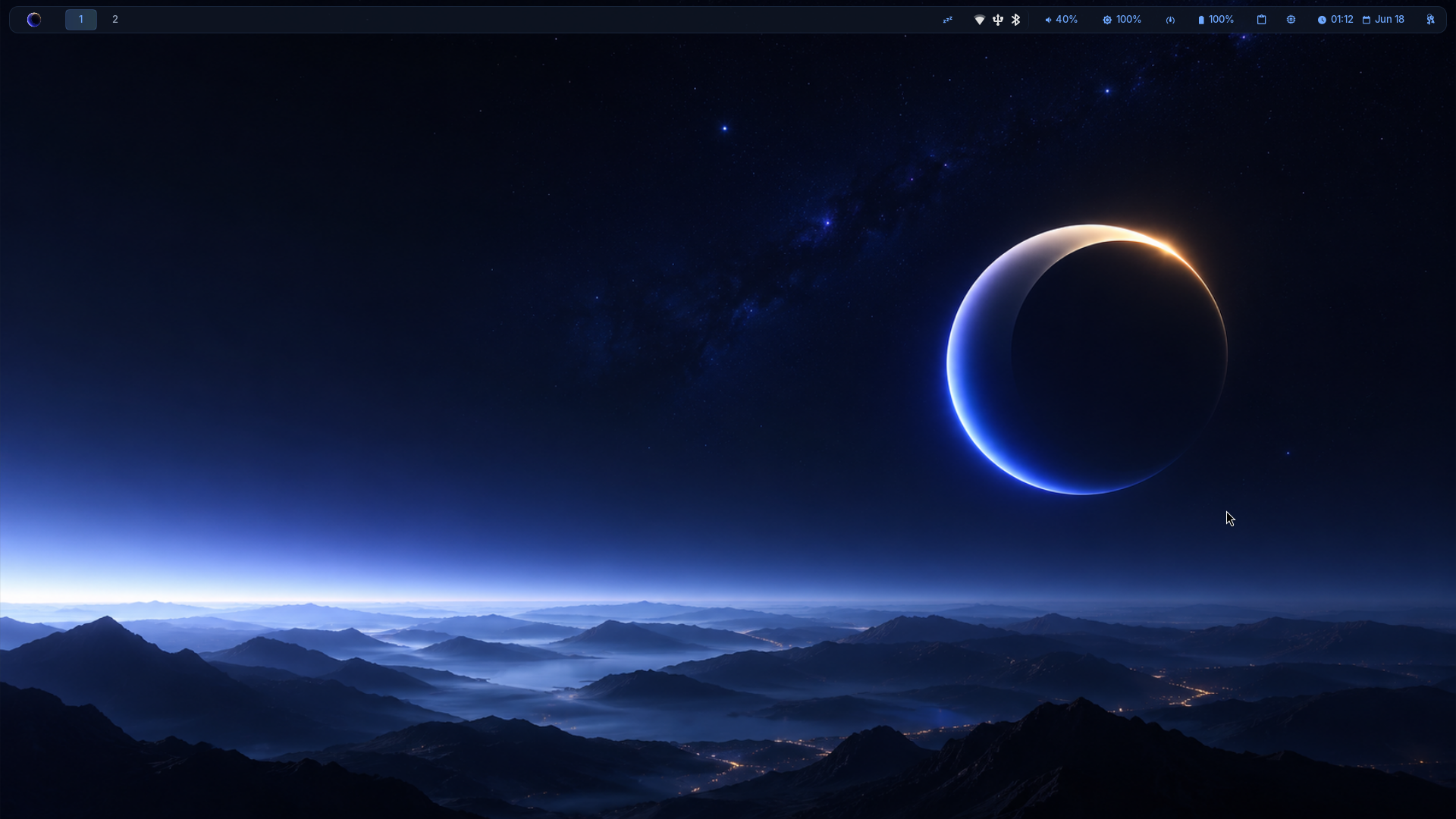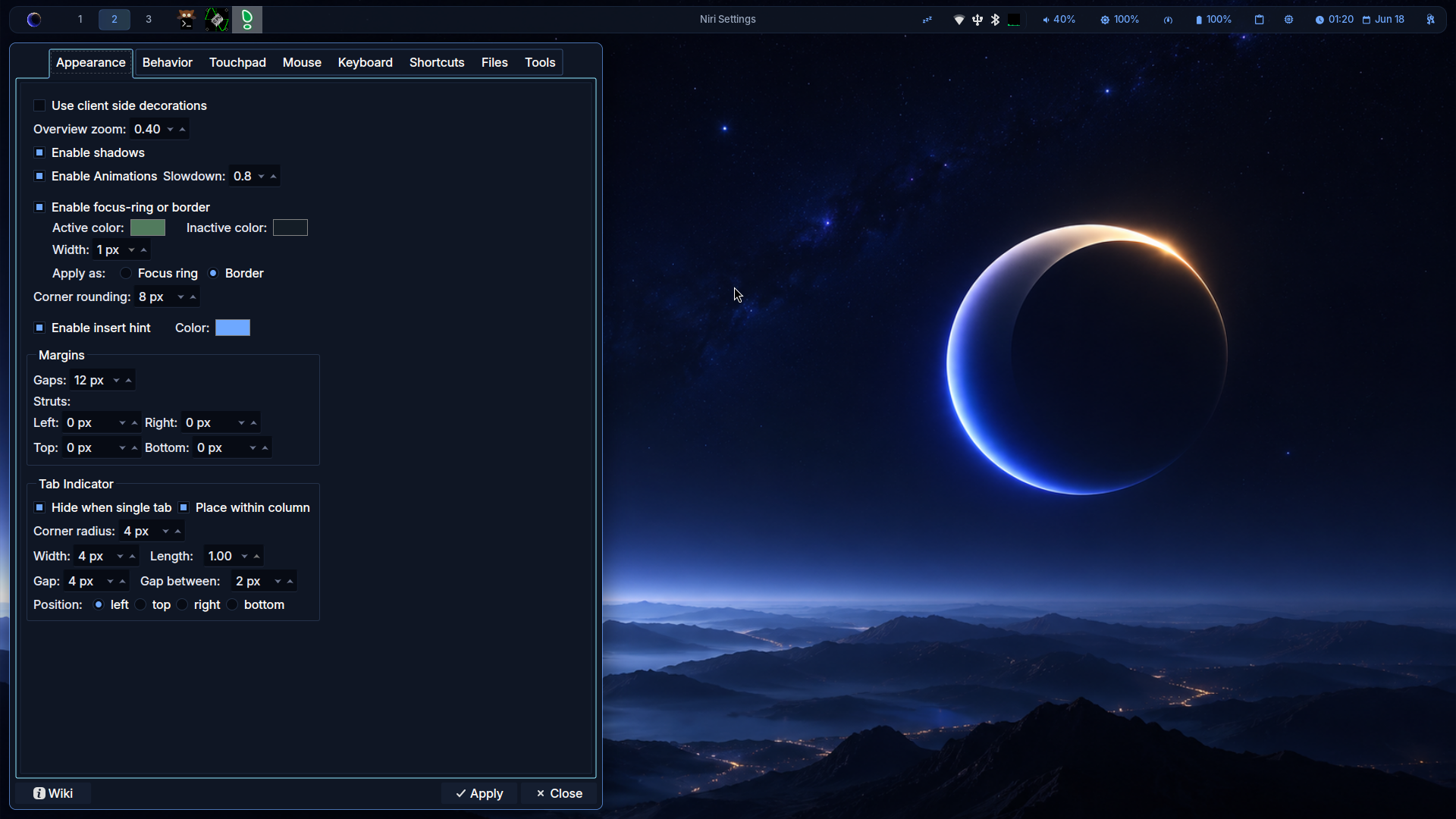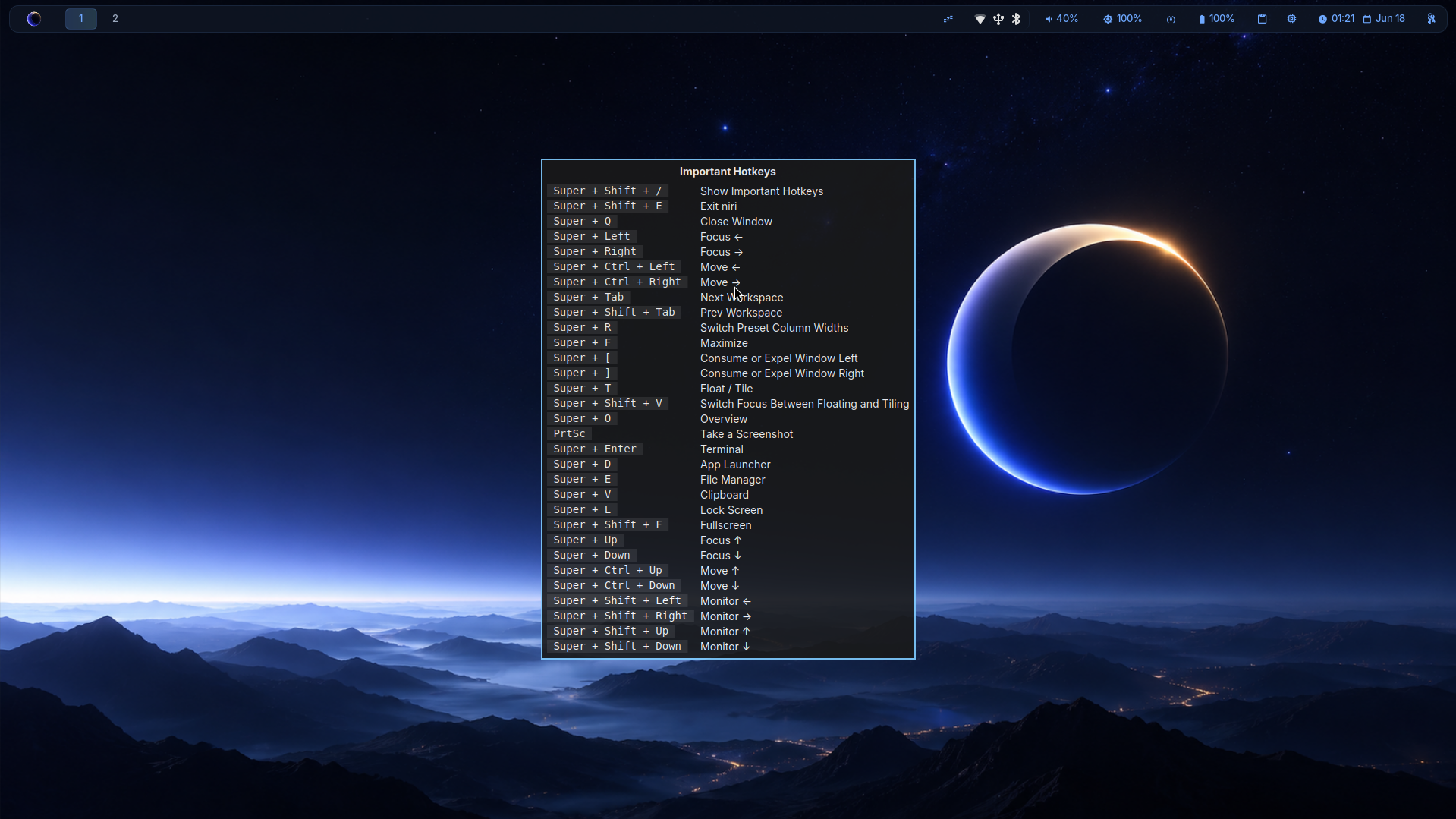
Flow through your desktop.
LumaOS is a Wayland-first Linux distribution built around the Niri scrollable-tiling compositor. Speed, elegance, and a deep-space aesthetic — crafted as a cohesive whole.
LumaOS is a Wayland-first Linux distribution built around the Niri scrollable-tiling compositor. Speed, elegance, and a deep-space aesthetic — crafted as a cohesive whole.
Every component in LumaOS is chosen with intention. No bloat. No compromise.
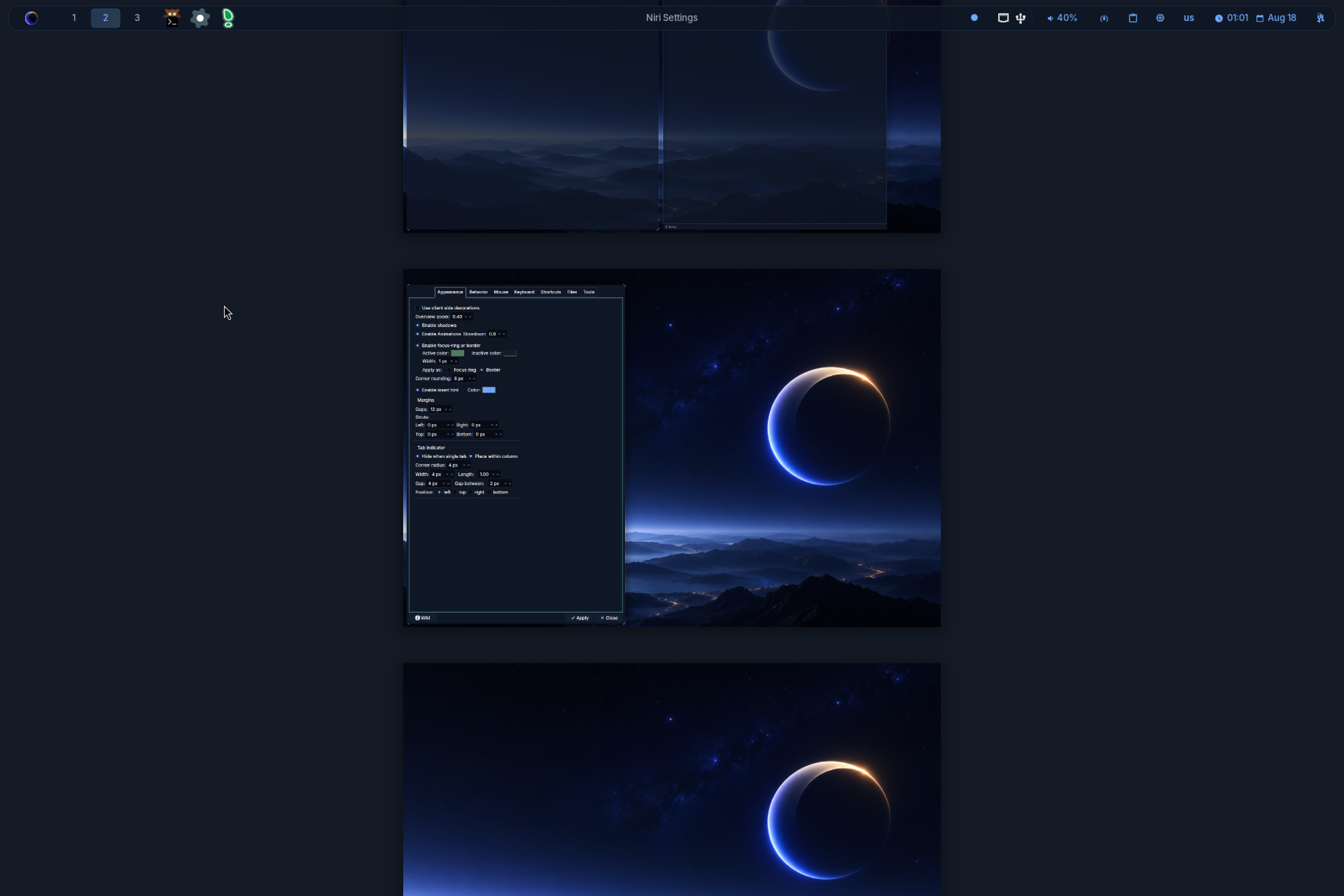
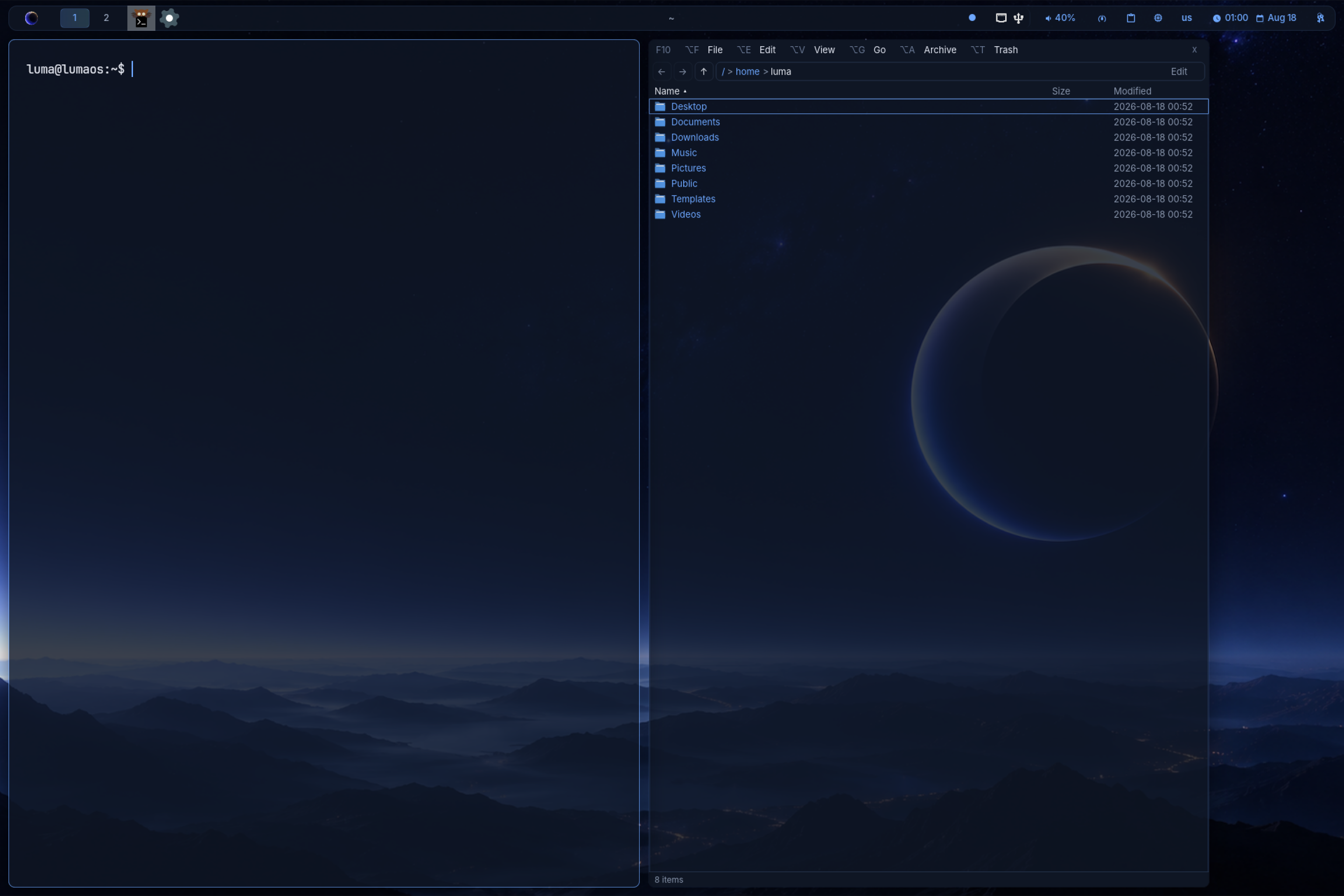
Scrollable-tiling Wayland compositor. Windows flow in a continuous strip — no overlapping, no clutter. Navigate with momentum.
Built on Ubuntu Resolute. Rock-solid base, broad hardware support, and a familiar APT package ecosystem underneath it all.
Every app runs on Wayland — Qt6, GTK, Electron, Firefox. XWayland is available as a fallback, but rarely needed.
Void Navy backgrounds, Aurora Blue accents, soft glows. A theme system applied consistently across every surface.
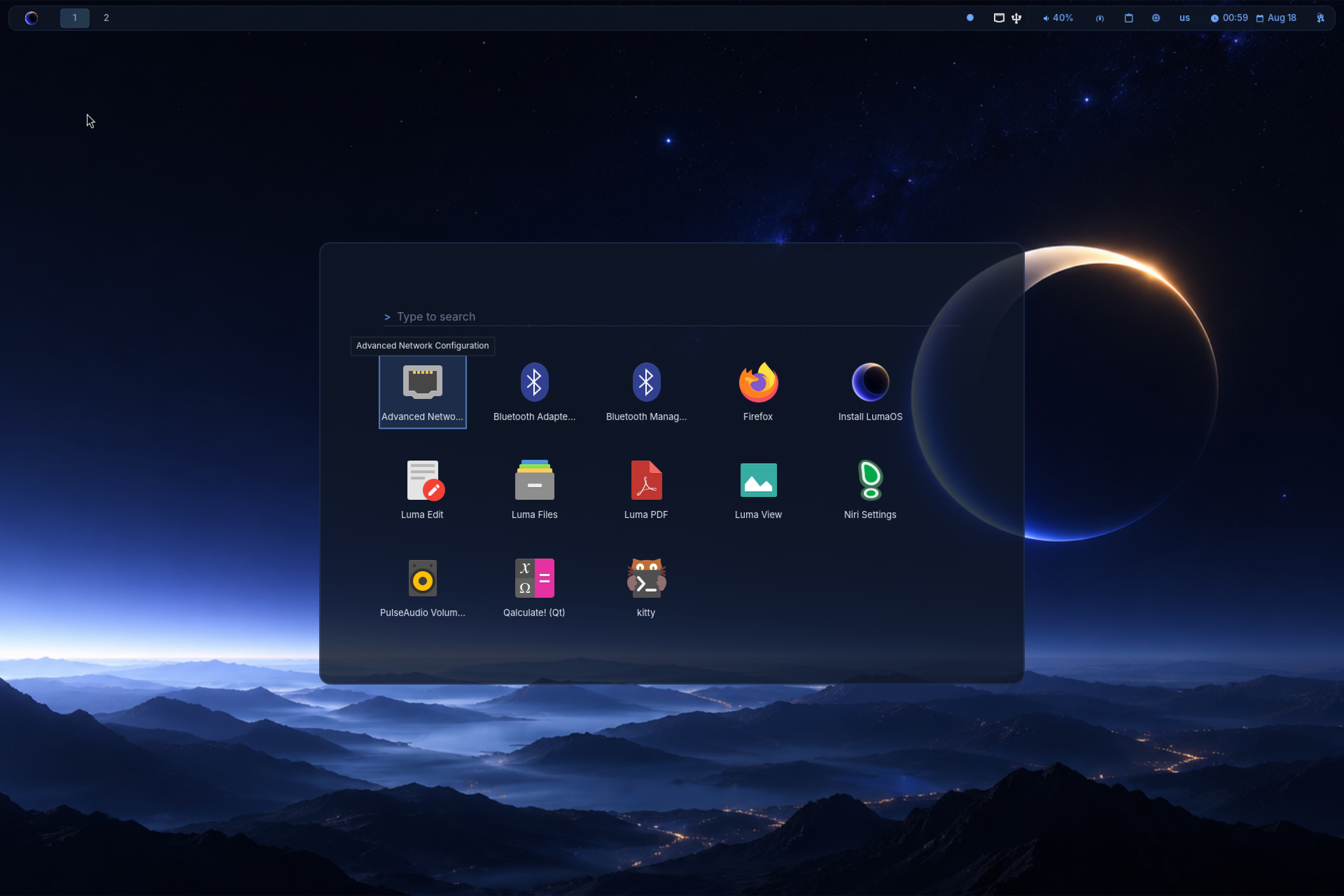
Waybar, luma-launcher, Kitty, Mako — every tool handpicked and themed to match. Kvantum handles Qt theming; GTK follows the same tokens.
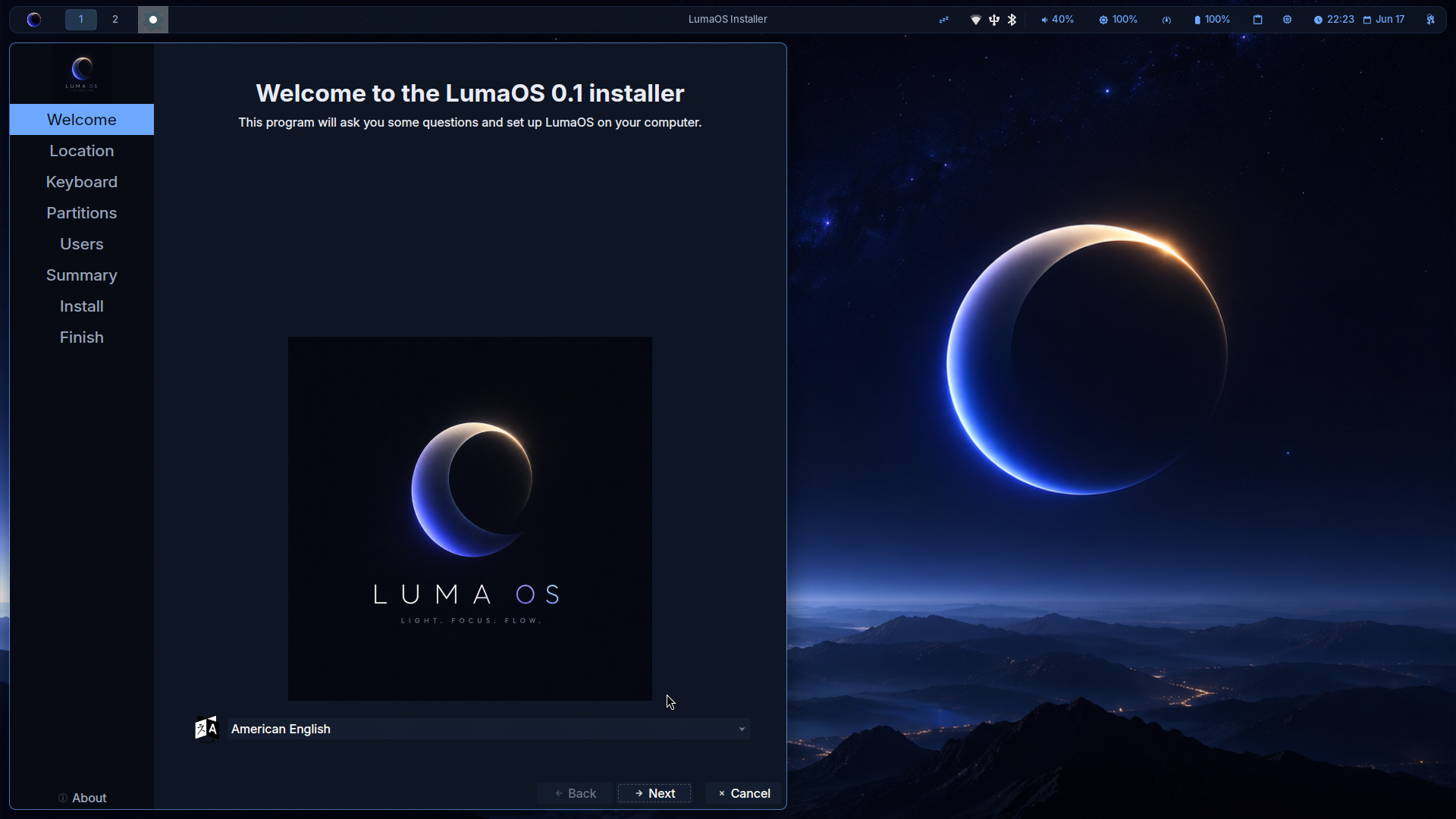
Ships with Calamares. Boot the live ISO, click through the installer, and have a fully configured system in minutes.
| Role | Component |
|---|---|
| Base | Ubuntu Resolute (26.04 LTS) |
| Compositor | Niri (scrollable-tiling Wayland) |
| Display manager | luma-session |
| Status bar | Waybar |
| App launcher | luma-launcher |
| Terminal | Kitty |
| Notifications | Mako |
| Audio | PipeWire + WirePlumber |
| Network | NetworkManager |
| Installer | Calamares |
Keyboard shortcuts, configuration, and everything you need to get started.
Loading documentation…
Verify with sha256sum -c lumaos-26.04-4.iso.sha256 after downloading.
Flash to USB with dd if=lumaos-26.04-4.iso of=/dev/sdX bs=4M status=progress
or Balena Etcher.
The short answers to the questions people ask most.
LumaOS is a personal Linux distribution, built first to match its creator's own workflow and needs, and shared publicly for anyone who finds that workflow appealing. It's a Wayland-first distro built around the Niri scrollable-tiling compositor, on top of an Ubuntu Resolute base.
LumaOS started after falling in love with scrollable-tiling window management. Once that workflow clicked, going back felt like a step down — but no polished, ready-to-install distro shipped a scrolling compositor as its default experience. LumaOS is the distro that fills that gap.
LumaOS comes from the initials of its creator: Luciano Magri, plus OS. The deep-space, glow-accented theme grew naturally out of that name.
Primarily scrollable-tiling and Wayland enthusiasts who want that workflow out of the box, without assembling it themselves. It's built on a solid, familiar foundation, so anyone who likes the workflow can extend it to fit their own needs.
Yes. As of the 26.04-3 release, LumaOS is considered stable for daily driving.
Ubuntu Resolute provides solid defaults: broad hardware support, a mature APT package ecosystem, and a well-tested base to build a curated desktop stack on top of.
Scrollable tiling — windows flowing in a continuous strip instead of splitting into grids — is a fundamentally different, and better, way to manage windows. Niri implements that model natively on Wayland, which made it the obvious foundation to build the rest of the desktop around.
Yes, LumaOS is Wayland end to end — there's no X11 desktop session. The greeter (luma-session) automatically detects any other Wayland compositors or desktop environments you install and lists them as login options, but X11-only sessions won't show up as something you can log into.
LumaOS is built from a lightweight stack (Niri, Waybar, luma-launcher, Kitty, Mako), so requirements are modest:
APT is the default and only package manager installed out of the
box — the same apt update / apt upgrade
workflow you'd expect from an Ubuntu-based system. If you'd
rather manage software through a graphical app store, LumaOS's
own repos also ship bauh,
which isn't installed by default but is available to install
from the LumaOS repos. Other APT or Flatpak front-ends can be
installed too, but bauh and Discover are the only ones themed
to match LumaOS out of the box.
Yes. LumaOS and its component packages are open source, licensed under the GNU General Public License v2 (GPL-2.0).
Bug reports and contributions are welcome on GitLab. Open an issue on the relevant project's repository.